
A game provider is a company that develops casino games: slots, table games, live studios and quick games. It creates the math, graphics, sound and software core of the game, while the casino simply plugs in the finished product and shows it to players. The provider determines the rules of the game, its RTP, its volatility and its extra features.
Provider and casino: who is responsible for what
Beginners often assume that the casino itself makes all the games on its site. In reality, the roles are separate.
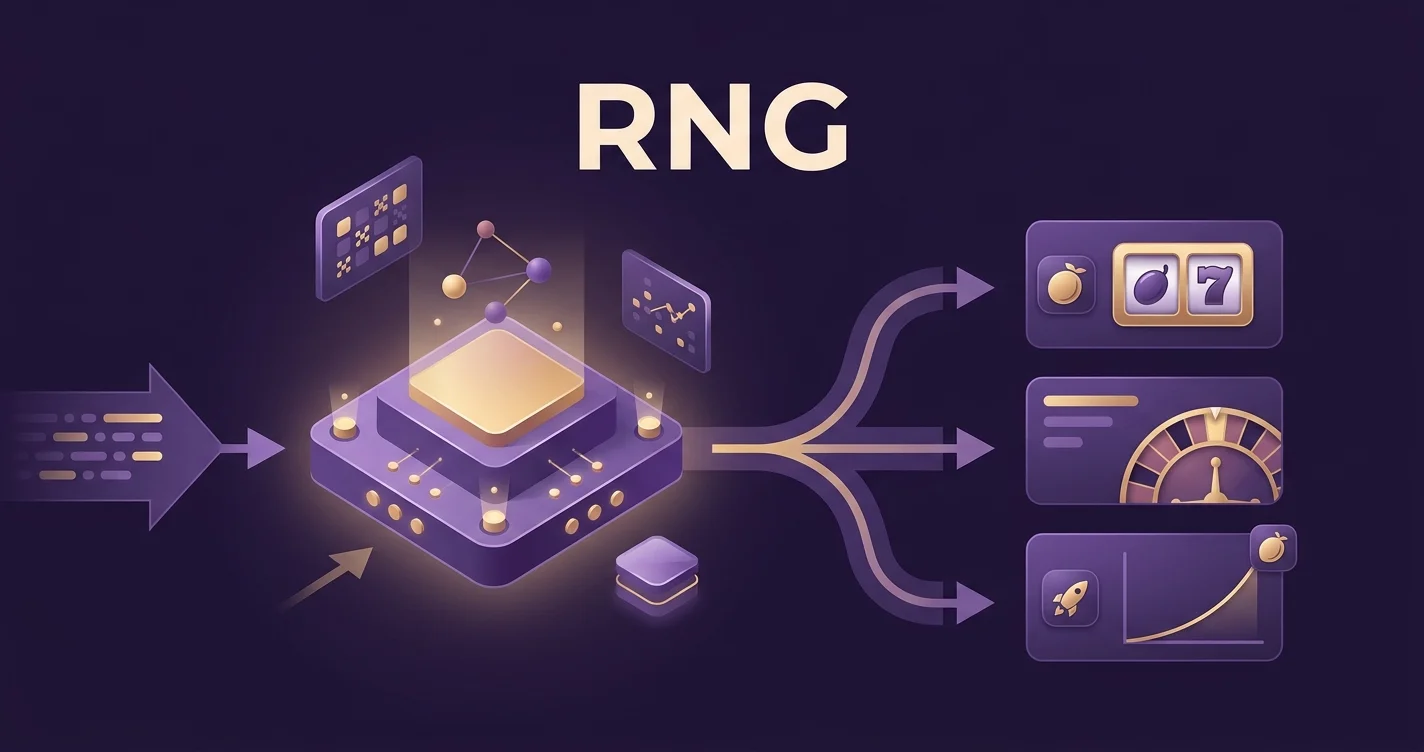
- The provider (developer) creates the game: draws the symbols, writes the rules, sets up the mathematical model, and programs the random number generator and bonus rounds.
- The operator (casino) builds the catalog, processes payments, issues bonuses, manages accounts, verifies players' age and identity, and runs support.
In other words, the casino is responsible for the service around the game, and the provider for the game itself. It is similar to a store and its manufacturers: the store sells products from different brands, but the manufacturer defines the product's characteristics.
What exactly the provider determines
The mathematical model
This is the most important part. The provider sets which symbols are on the reels, how often they land, how much each combination pays and how the bonus features work. This produces the game's RTP: the theoretical percentage of wagers returned to players over a very long run. It also gives rise to the casino's edge, i.e. the difference between 100% and the RTP; see the term "house edge."
Volatility
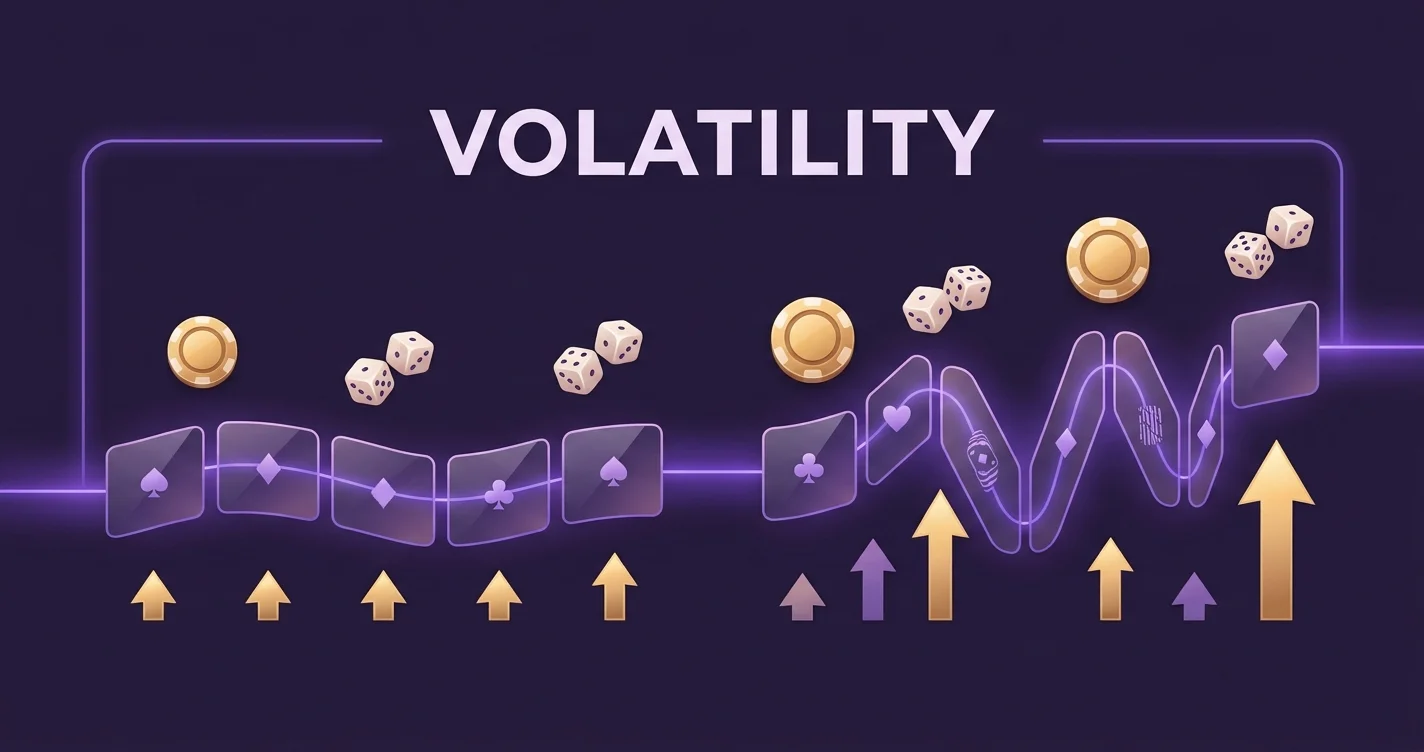
Two slots with the same RTP can play completely differently. In one, wins are small and frequent; in the other, they are rare but larger. This character of a game is called volatility, and it too is built in by the developer.
Mechanics and features
Cascades, multipliers, expanding symbols, scatters, in-game free spins, bonus buys: the provider invents and programs all of these. That is why games from different studios feel different, even when the theme is similar.
The visuals and the mobile version
Graphics, animation, sound, and speed on a phone and in a browser are also the developer's job. This affects comfort, but not your chances of winning.
Live studios
In live games, the provider also runs the studio: hires dealers, installs the equipment and handles the broadcast. The casino connects the finished table to its site.
How a game gets into a casino
There are two main routes.
- Direct integration. The casino connects to a single studio directly and negotiates terms separately.
- Through an aggregator. This is an intermediary that collects the games of many studios into a single connection. That way the casino quickly gets a large library without dozens of separate contracts.
For the player, the difference is invisible: on the site they simply see a catalog of games. But this is exactly why a catalog of thousands of slots is possible: it is assembled from the products of many developers. The RichTop catalog also has thousands of slots and live games, so before choosing it is worth reading the descriptions of specific games.
Who sets the RTP: the provider or the casino
The provider builds in the base math. But in some cases a developer releases one game in several versions with different RTPs, for example slightly higher and slightly lower. Which version to connect may be up to the operator. That is why the same game on two different sites sometimes has a different RTP.
The practical takeaway: do not rely on a figure you read somewhere. Open the info section or the rules inside the game and check the stated RTP exactly where you plan to play. If there is no figure, that is a reason to be more careful.
An example with simple numbers
Suppose the catalog has two versions of the same game from the same provider: one with 96% RTP and one with 94% RTP. You make 1,000 spins at UAH 10 each, so the total wagered is UAH 10,000.
| Game version | RTP | Theoretical return from UAH 10,000 | Theoretical loss |
|---|---|---|---|
| Version A | 96% | UAH 9,600 | UAH 400 |
| Version B | 94% | UAH 9,400 | UAH 600 |
A difference of 2 percentage points gives a theoretical difference of UAH 200 for every UAH 10,000 wagered. This is the average expectation over the long run, not a forecast for your session. Over 1,000 spins the actual result can differ greatly in either direction, especially in high-volatility slots. But in the long run, the game with the higher RTP "eats" less.
The second example is about volatility. Both versions may have a 96% RTP, but in one the game gives small wins almost every spin, while in the other there are long streaks without a win, after which a big one comes. A UAH 1,000 budget will last longer in the first, and in the second it may run out quickly or, on the contrary, suddenly grow. There is no way to predict this in advance.
Types of providers
- Slot studios - video slots, classic slots, games with jackpots.
- Live providers - roulette, blackjack, baccarat, game shows with live hosts.
- Quick game developers - crash games, instant lotteries and similar formats with short rounds.
- Universal studios - make a bit of everything.
Some studios are known for a certain style: some bet on high volatility and big multipliers, others on a calm pace and simple rules. This is a general tendency, not a guarantee: each game must be assessed separately.
How the provider affects your decisions
Choosing a game
The developer's name hints at the general style, but it is better to decide by parameters: RTP, volatility, minimum and maximum bet, and available bonus features. Use demo mode if it is available: a few dozen spins will show the pace of the game, although they will not predict the result in real play.
Bonuses and wagering
Bonus terms often depend on the game. Not every slot counts equally toward wagering, and some games may be excluded entirely. Before activating a bonus, check the rules and read how the wagering requirement is calculated. Free spins are usually granted for specific games, so the list of available slots should also be checked in the promotion terms.
Budget
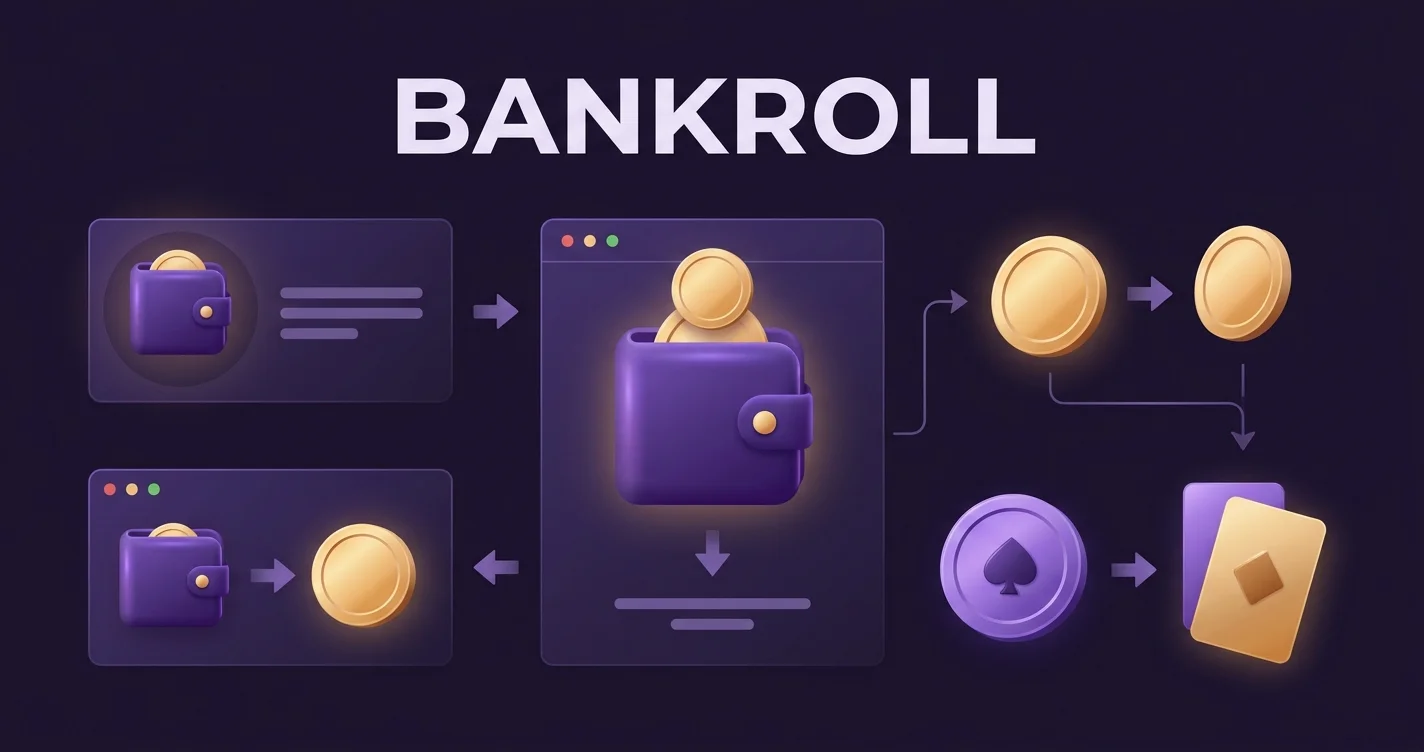
The minimum bet, spin speed and volatility determine how quickly a bankroll is spent. A game with a high stake per spin and fast animation drains the balance much faster than a slow game with a stake of a few hryvnias.
Common myths
- "This provider is paying out today." There is no such thing. Every spin is independent, and the result is determined by the random number generator, not by the studio's "mood" or the time of day.
- "A new game pays more to attract players." A new game has the same stated math as any other. If the RTP is 96%, it is 96% on release day and a year later.
- "If a game is from a well-known developer, it is easier to win." A studio's name speaks to the quality of execution, not to your chances. The casino has an edge in all games.
- "The casino can tweak an individual spin." In fair games, the result is generated according to the developer's rules, not manually for each player. That is why it is important to play on a verified site and to look at the game information in the game itself.
- "Games from one provider are similar in results." Even within a single studio, the RTP, volatility and hit rate differ from game to game.
Typical player mistakes
- Choosing a slot only for its pretty picture or a popular studio brand.
- Not checking the RTP in the game rules and assuming it is the same everywhere.
- Wagering a bonus on a slot that does not count or counts only partially.
- Raising stakes to "win it back" in a high-volatility game.
- Looking for patterns in streaks of spins: there are none.
A practical check before you play
- Open the game's info or rules section and find the RTP.
- Check the game's volatility and bet range.
- If there is a demo, play for a few minutes to get a feel for the pace.
- If you are playing with a bonus, check whether this game counts toward wagering.
- Set a budget and a time limit before you start, not after a loss.
If you need help choosing a game or understanding bonus terms, you can ask Rich Top support: the on-site chat works around the clock. And if you feel that your play is getting out of control, use the limiting tools: at Rich Top, self-exclusion is available for periods from 6 months to 5 years.
Summary
A game provider is the developer who creates a game and its math, while the casino merely provides the platform. It is the studio that determines the RTP, volatility and mechanics, so these parameters matter more than the brand name. Look at the rules of the specific game, do not believe in "lucky" providers, and remember: no developer guarantees a win. Gambling is intended only for adults, 18+, and should be entertainment, not a way to make money.




 Google

 Payment History